.png?w=300&h=100)

Eames Lounge Chair: A Shop Owner’s Perspective on a Modern Design Icon
Dec 09,2025
As someone who has spent years working closely with furniture—evaluating materials, craftsmanship, and the stories behind iconic designs—the Eames Lounge Chair & Ottoman remains one of the most interesting pieces I encounter. Designed in 1956 by Charles and Ray Eames and produced today by Vitra and Herman Miller, the chair is widely recognized in design education and is part of the Museum of Modern Art (MoMA) collection.
Customers often ask why this chair receives so much attention. From a furniture professional’s standpoint, its significance comes not from trend or celebrity use, but from the thoughtful engineering and research that shaped its creation.
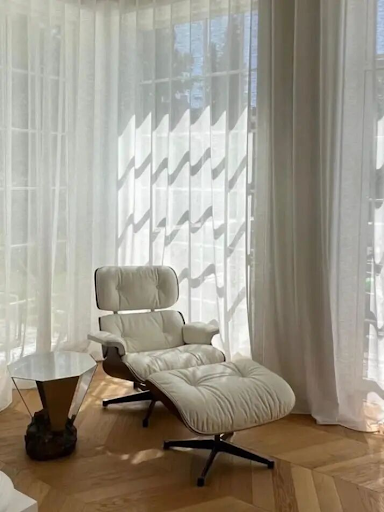
How the Design Came to Life
The Eameses approached furniture design with a scientific mindset—testing prototypes, studying human posture, and pushing material boundaries. When I talk with customers about this chair, I often explain that its development was rooted in:
- understanding how the human body naturally sits and rests
- exploring new uses of molded plywood
- creating comfort without excessive upholstery or ornamentation
This approach makes the Lounge Chair more than a style statement; it’s a design experiment that succeeded.
The Ergonomics Behind Its Long-Lasting Appeal
1. A Shape Based on Real Human Anatomy
Having personally tested dozens of lounge chairs over the years, I can say the Eames’s molded plywood shells follow the body far more naturally than many contemporary designs. This was not accidental; it came from extensive anatomical research.
2. The Measured 15° Recline
The fixed recline angle often surprises first-time sitters. But as many customers discover, the angle supports reading, conversation, or relaxed thinking without feeling overly reclined.
3. Independent Cushion Sections
From a maintenance standpoint, I appreciate that each cushion is individually upholstered. From a comfort standpoint, this allows different parts of the body to be supported as needed—something my customers often comment on when they try the chair in person.
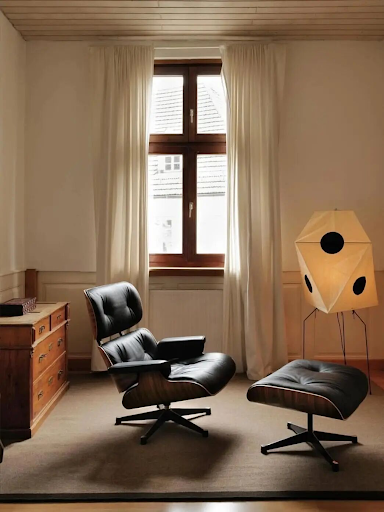
Materials and Craftsmanship Through a Professional Lens
Working in furniture retail, I’ve learned that materials reveal far more about a piece than its outward appearance. With the Eames Lounge Chair, several details consistently stand out:
- Molded plywood provides both structure and flexibility.
- Veneers like walnut and palisander offer long-term visual depth.
- Aluminum bases are engineered for stability and smooth rotation.
- Leather cushions age well with proper care and can be replaced individually.
For customers caring for similar materials, our article “Caring for Leather and Wood Surfaces at Home” (internal link) addresses the most common questions I receive.
Cultural and Academic Importance
As a shop owner, I often see certain designs become popular because of films or social media. The Eames Lounge Chair does appear frequently in visual culture, but its true longevity comes from something deeper:
- It is studied in design programs.
- It is displayed in museums.
- It is referenced in academic writing about mid-century innovation.
This level of documentation gives the chair credibility beyond its aesthetics.
Thoughtful Updates in Modern Production
Contemporary production by Vitra and Herman Miller includes improvements that align with current environmental standards—responsibly sourced wood, updated foams, and energy-conscious manufacturing.
From my perspective, this balance between honoring the original design and adapting to modern expectations is one reason the chair remains relevant today.
When This Chair Fits a Customer’s Needs
Over the years, I’ve noticed the Lounge Chair appeals most to people who:
- appreciate historically significant design
- prefer a semi-reclined, supportive posture
- incorporate mid-century pieces into contemporary homes
- value durability and component replaceability
- want a piece with a clearly documented design lineage
It’s not a chair for every room or every person, but when it aligns with someone’s lifestyle and interests, it tends to be a long-term companion.
Final Thoughts
From the standpoint of a furniture shop owner, the Eames Lounge Chair stands out because it represents a rare combination of thoughtful engineering, ergonomic research, and material innovation. Its presence in museums and design literature is not incidental—it reflects real substance behind the design.
At tabularasa-furniture.com, our goal is to help people understand pieces like this not just for how they look, but for the ideas and craftsmanship that shaped them. The Eames Lounge Chair remains one of the clearest examples of how design and comfort can come together in a way that lasts for generations.
FAQ
1. What makes the Eames Lounge Chair an iconic piece of modern design
Designed by Charles and Ray Eames in 1956, the Eames Lounge Chair is celebrated for its perfect blend of comfort, craftsmanship, and timeless style. Its molded plywood and leather construction revolutionized lounge furniture design.
2. Who designed the Eames Lounge Chair and when was it introduced
The chair was designed by Charles and Ray Eames and released in 1956 by Herman Miller. It quickly became a symbol of mid-century modern luxury and innovation.
3. What should I look for when buying an authentic Eames Lounge Chair
Check for original labels from Herman Miller (US) or Vitra (Europe), high-quality leather and plywood, and proper stitching. Reputable retailers or certified vintage dealers can help ensure authenticity.
4. Why is the Eames Lounge Chair still relevant today
Its combination of ergonomic comfort, elegant design, and superior craftsmanship keeps it highly desirable for collectors and modern interiors alike. It remains a benchmark for luxury and functional furniture design.
5. How can a shop owner present the Eames Lounge Chair to potential buyers
Highlight its history, craftsmanship, and design impact. Demonstrate comfort, discuss materials and construction, and share its legacy in mid-century modern design to connect emotionally with buyers.